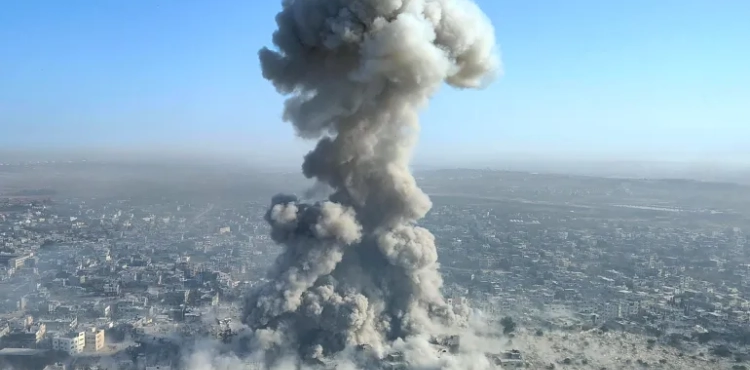
Field sources reported that Israeli occupation forces have escalated their demolition of residential areas and artillery shelling in various parts of southern and eastern Gaza in recent hours. The systematic destruction has been concentrated in the eastern areas of Khan Younis, where massive explosions were heard, resulting from explosives planted in civilian homes and detonated remotely.
Sources confirmed that Khan Younis is experiencing a complex geographical situation after being effectively divided in two. The Israeli army completely controls the eastern section, while large parts of the western section have been transformed into what is called a "security buffer zone." Displaced people living in tents within these areas face direct targeting by gunfire and shelling to prevent any permanent settlement.
In Gaza City, the demolitions were not limited to the southern border but extended to the eastern neighborhoods, specifically the Zeitoun neighborhood and its surrounding areas in the southeast of the city. The occupation aims, through these operations, to expand the "yellow zone," which are security zones under its complete control after displacing their residents and destroying their infrastructure entirely.
The eastern part of the Zeitoun neighborhood witnessed intense drone activity, with drones dropping explosive bombs directly on Palestinian homes and the area surrounding the Zeitoun Club. These attacks are part of a series of daily violations of the ceasefire agreement signed on October 10, 2015, which has failed to halt the Israeli killing machine.
On the maritime front, Israeli gunboats continued to target the Palestinian coast, firing heavy machine guns indiscriminately off the coast of Gaza City. While no injuries were reported in this latest attack, fishermen and residents face ongoing threats that prevent them from approaching coastal areas.